Data gap hampering hurricane relief response, expert warns
Article By: Old Harbour News
-

- Nov 06, 2025 06:36 PM | News
-
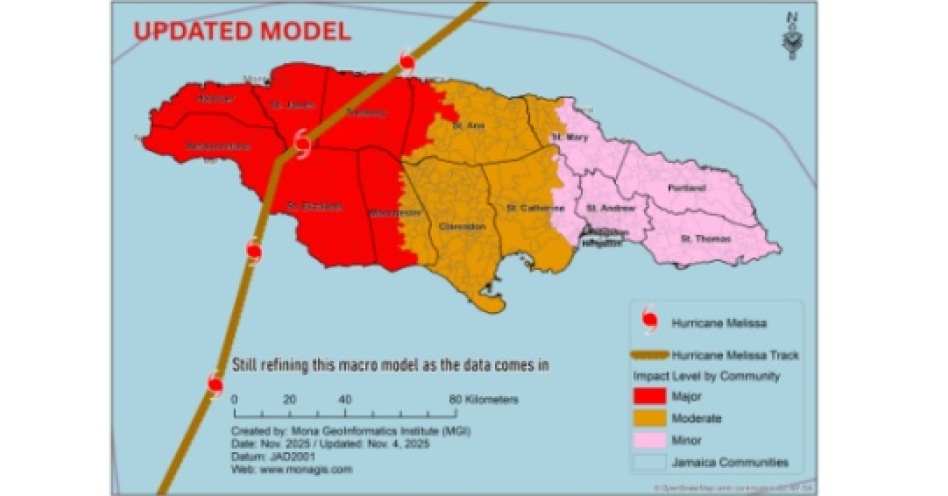
The Mona GeoInformatics Institute (MGI), which has been mapping the storm's impact since it struck, has issued a stark warning that aid distribution is inefficient and situational awareness is lacking due to outdated methods.
Hurricane Melissa made landfall on October 28, 2025, as a catastrophic Category 5 system, unleashing sustained winds of 185 mph, storm surges of up to 13 feet, and torrential rainfall measuring up to 500 mm in some areas. The storm triggered widespread flooding and landslides, particularly battering communities in the southern and eastern parishes, and causing severe damage to transportation, power, and communication networks.
In the face of this destruction, MGI has been working to create dynamic impact models to guide emergency teams. However, the Institute’s executive director, Luke Buchanan, stated that their data-driven approach is not being fully embraced by all relief coordinators.
“In the aftermath of Hurricane Melissa, it has become increasingly clear that current relief efforts are not fully leveraging the power of data and geospatial analysis,” Buchanan said. “Too often, critical decisions are being made without access to real-time, location-based information... This results in gaps in situational awareness, delayed responses, and challenges in tracking the effectiveness of aid distribution.”
MGI uses Geographic Information Systems (GIS) to identify affected areas on a macro level, deduce the severity of impact, and pinpoint communities most in need of essentials like food, shelter, and clean water.
Buchanan is now urging a strategic shift, calling on all government agencies and relief partners to integrate these technologies into their core operations.
“We therefore urge all relevant government agencies and relief partners to integrate geospatial data and mapping technologies more deeply into their operations,” he appealed. “Doing so will not only enhance coordination and transparency but also ensure that resources reach the most affected communities more efficiently.”
He affirmed that MGI stands ready to provide technical expertise and real-time data solutions to bolster the national response. The Institute, part of UWI Mona, reiterated its commitment to leveraging technology to enhance national resilience and disaster preparedness, a mission it sees as vital for Jamaica’s recovery and future.
As the country begins the long road to rebuilding, the question of how to best use 21st-century tools to manage a 21st-century disaster has been pushed to the forefront of the recovery conversation.