Marlie Mount school bee invasion driven by environmental shifts post-hurricane – biologist
Article By: Alexia King-Whyte
-

- Nov 20, 2025 08:13 AM | News
-
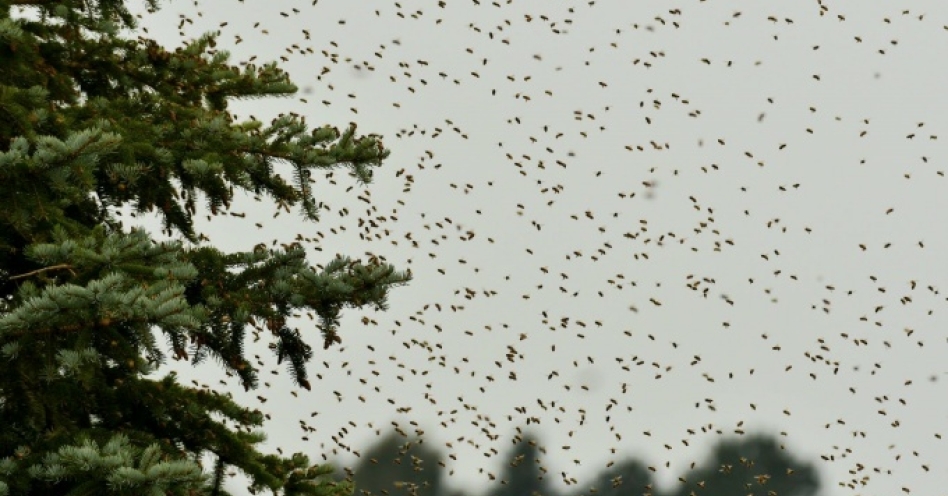
According to terrestrial biologist Damion Whyte, the hurricane destroyed several hives islandwide, forcing bees to relocate and aggressively search for food sources that have become scarce.
“There are 69 species of bees but the main bee that’s showing up in most places is the Apis mellifera, which is more commonly known as the honey bee, which was brought to Jamaica to create honey. The passing of Hurricane Melissa over the island destroyed several of their hives and affected them. Some are searching to find other homes and some are searching for sugar from flowers and can’t find any since the hurricane,” he said.
Whyte added that how bees assemble in an area often reflects their immediate needs and the state of the colony.
“If you see a large swarm of bees, the queen is there and the scout bees are searching for a new home for their colony. In that case, the proper authority is needed to remove the hive but if you see bees and there is not many of them together, they are just picking up food to carry back [to their hive]… places with sugar, syrup, and juices encourage them to visit those areas,” he explained.
Whyte’s explanation helps shed light on last Thursday’s bee invasion at Marlie Mount Primary School in Old Harbour, where a migrating swarm settled on parts of the institution’s compound, prompting administrators to suspend classes early.
The incident occurred around 10 a.m. when bees began swarming sections of D Block and the infant department, creating a potential risk for students and staff. The situation forced administrators to act swiftly, urging parents to collect their children, especially those with allergies or discomfort around bees.
According to Principal Calvin Harris, a large number of bees were seen moving across the campus, and early attempts to contain them were unsuccessful. In a voice note to parents via the school’s WhatsApp group, Harris explained the severity of the event.
“We have been trying to see if we can contain them [the bees] but we have not been able to. It is extremely bad particular on the D Block and the infant department and I have already seek intervention. I have no control over the circumstances as we all know, but in the same breath, I want the children to be safe so do your best to pick up your children,” he said.
Parents responded quickly, arriving at the campus to collect their children while teachers relocated classes to safer indoor areas and monitored the situation closely.
The school administration contacted bee specialists at the Ministry of Agriculture’s apiculture unit, based at the Bodles Research Centre, who visited the site to help bring the situation under control. By Friday morning, the swarm had moved on and normal operations resumed.
It is still a strong possibility, however, that another bee invasion could occur at Marlie Mount Primary and Infant as the insects continue to search for pollen, a scarcity at present due to the passage of Hurricane Melissa. Bees are also known to swoop down on garbage bins where plenty juice boxes exist.
Last week’s incident marks two years after a similar bee invasion disrupted activities at the same institution. On November 22, 2023, Marlie Mount Primary School was forced to close early after several students reported being stung, resulting in classes being suspended around 12:30 p.m., as previously reported by Old Harbour News.
While no serious injuries were reported in last week’s event, concerns have been raised about the recurring bee activity in the area and highlights the importance of proper hive management and environmental shifts that influence bee behavior. School officials say they will continue monitoring the situation to prevent further disruptions.
Additionally, parents are encouraged to notify the school of any student allergies and to remain alert for updates as the administration works with relevant agencies to ensure a safe learning environment.
While frightening when swarming, bees play a critical role in Jamaica’s ecosystems. Honey bees and native species are essential pollinators, supporting fruit and vegetable crops, flowering plants, overall biodiversity, food production and food security.
Whyte emphasized that bees should be removed safely and not exterminated, particularly when colonies are relocating or displaced by weather events, since their survival is essential to the island’s environment and agriculture.